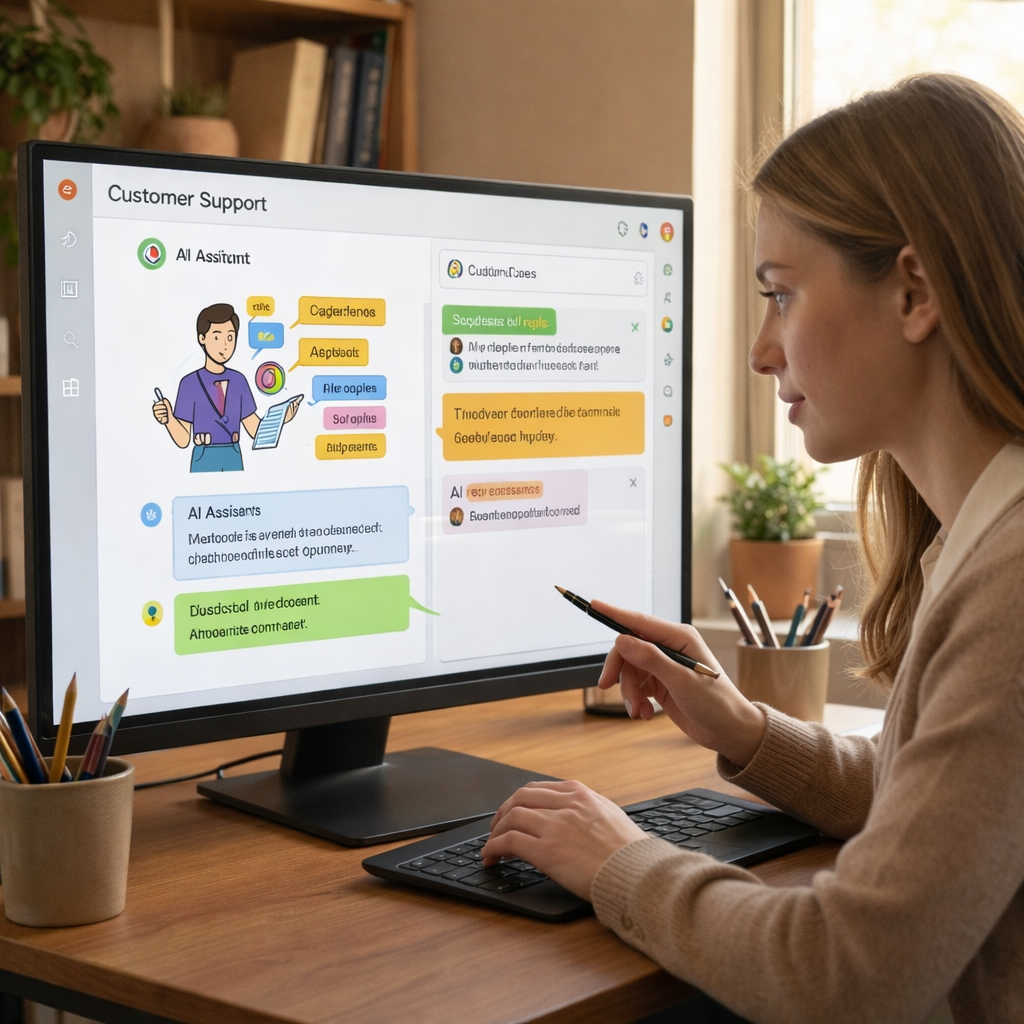
There’s a moment every customer support agent knows too well the queue is growing, the same questions keep coming in, and there simply aren’t enough hours in the day. For years, BPO companies solved this by hiring more people. Today, a different answer is taking shape.
Artificial intelligence is quietly rewriting how customer support works not by replacing people wholesale, but by changing what people actually spend their time doing.
From Cost Centers to Smart Operations
The BPO industry has always been built around efficiency. Companies outsource because it saves money and scales quickly. But the traditional model had real limits: human error in data entry, long wait times, rising labor costs, and the constant challenge of managing demand spikes without overstaffing.
AI addresses all of these simultaneously.
Chatbots and virtual assistants now handle a massive share of routine queries across chat, email, and voice around the clock, without breaks. The impact is measurable. Companies using AI voice assistants for customer support have seen average handling times drop significantly and first-call resolution rates improve. Customers get faster answers. Agents get breathing room.
What AI Actually Does in a BPO
It helps to be specific here, because “AI in BPO” can mean a dozen different things.
- Automating the boring stuff. Robotic Process Automation (RPA) paired with machine learning is handling data entry, invoice reconciliation, document verification, and payroll processing tasks that were historically prone to human error and slow turnaround. Some organizations have cut processing time dramatically just by removing humans from steps that didn’t need them.
- Reading between the lines. Natural Language Processing lets AI understand what a customer is actually asking including tone and sentiment. If someone is frustrated, the system knows. This makes escalations smarter and more timely.
- Predicting what comes next. AI-driven analytics help BPO managers anticipate ticket volumes before they spike, which means staffing decisions get made ahead of time rather than in response to chaos.
- Quality monitoring at scale. Instead of randomly sampling 5% of calls for quality checks, AI can review 100% of interactions flagging compliance issues, script deviations, and opportunities for agent coaching in real time.
AI is transforming what outsourced customer support can deliver — and the cost benefits go beyond the contact centre. See how outsourcing and AI together tackle the challenge of rising operational costs.
The Human-AI Balance
Here’s what often gets lost in the conversation: AI works best when it’s paired with people, not substituted for them.
The BPO companies finding success aren’t the ones automating everything they can. They’re the ones being deliberate about what AI should own and what people should own. Routine queries, data processing, outbound lead qualification these are natural fits for automation. Complex complaints, emotionally charged calls, nuanced negotiations these still need a human who can listen, adapt, and respond with judgment.
What this creates is a shift in roles. Agents who once spent their day answering the same ten questions now handle the calls that actually require them. That’s better for customers and, frankly, better for agents too.
The Numbers Behind the Shift
The scale of this transformation is hard to ignore. The global AI in BPO market was valued at around $2.6 billion in 2023 and is projected to reach nearly $50 billion by 2033. That’s not a trend that’s a structural change in how an entire industry operates.
And businesses are moving fast: the majority of BPO providers have already integrated some form of automation into their core services, with AI-powered chatbots now handling a significant share of all customer queries.
What This Means for Businesses Looking to Outsource
If you’re evaluating BPO partners today, AI capability isn’t a bonus feature it’s a baseline requirement. The right partner should be able to show you how they use automation to improve accuracy and reduce turnaround times, and how their human agents are deployed on the work that matters most.
The future of customer support isn’t fully automated. It’s smarter with the right tasks going to machines and the right tasks going to people who are now free to do them well. In e-commerce, this hybrid model is already delivering measurable results faster resolution on routine queries, lower return processing costs, and higher retention through proactive outbound. See how AI-powered BPO works in practice for online retailers.
At Globurn Resource Management, we help businesses navigate this shift combining the right people with the right technology to deliver customer support that actually works. If you’re ready to explore smarter outsourcing solutions, get in touch with our team today and discover how our BPO services can support your business growth.
Frequently Asked Questions?